Bass Boosted.html

Experience what it's like to own a Bass Boosted

Click the book to read

Western Pop.

Conversation with Saturn Through My Telescope

Written by Jihoo Kim

“Hong Kong’s independent scene is great as it is, but some musicians deserve more success.” Surrounded by a dark, obscure grove of towering trees, I saw a performer on the lit stage, carrying an electric guitar and a laptop. I didn’t know who it was. My phone was out of battery, neither were there any notices; people would just enter the stage, player their music, then leave. As the performer strummed the electric guitar, the amplification echoed through the speaker, roamed the entire helipad, and returned a sui generis feedback. I stood at the front of the crowd when the sound pierces my earplug. That was my first encounter with Sariana, a.k.a. the guitarist and the frontperson of Saturn Through My Telescope. Sariana studied guitar in a university in Germany before moving to Hong Kong. “It was a painful process.” By then, they had only played guitar for four years. In high school, starting guitar at 16 was normal. But, in university, they found themselves between instrumentalists who’ve held their guitar for about a decade of their life. Reasonably, Sariana felt behind; as they recall, “everyone was better.” Moreover, the peers didn’t share many interests with Sariana. Unlike Sariana who predominantly played post-rock, they were into classic rock, blues, and indie rock. “I like it, but I don’t choose to play it.” Despite the circumstances, Sariana thinks that their academic journey with music was overall beneficial. Because they had relatively less musical experience at start, they were able to develop the skills more efficiently throughout. The skills they’ve acquired—maintaining discipline, having a good stage presence, trusting the instincts, and so on—prepared them for the “mosh” atmosphere for their shows to come. “I got my money’s worth,” Sariana laughed. When Sariana arrived at Hong Kong, they met their future bandmate Kelsey, who approached them in a concert at the Wanch (live venue in Wan Chai). This marked Sariana’s connection with the music scene. Kelsey invited them to a show, and introduced Sariana to their first band, a post-punk band from Hong Kong. Later then, Sariana joined Kelsey’s punk band KVYLE with Underdog. The band split up last summer, but Sariana is still working on their solo projects including Saturn Through My Telescope. An year ago, they released second-pressing of CD copies of Every Time I Talk To You, It's Like I Open Up A Part Of My Heart And Let You Look Inside—their three-track debut EP which they’ve recorded in Germany. Besides, Sariana recruited drummer Hei, who participated in their show with renowned screamo band Ostraca. “There were positive feedbacks,” Sariana said. Now, they are looking forward to finding a bassist. Upon the intensifying and liberating works of Saturn Through My Telescopes, it’s not difficult to derive how prominent post-rock influences are to their music. Initially, Sariana’s interest in post-rock sprouted from Mogwai, and as the time passed, it spread to household post-rock bands such as Godspeed You! Black Emperor, Explosions In The Sky and This Will Destroy You. When we visited Infree Records, they shared their recent shock when fans speculated Explosions In The Sky’s disbandment, for it to just be a promotion for their new album—End. Yet, the most significant influence on Saturn Through My Telescopes was none other than Deafheaven. Sariana was first introduced to this black-metal band by their childhood friend. Then, Deafheaven would become the only artist they’ve listened to for an entire year. Sariana recalls a time when they lived in Switzerland, when they—coincidentally—found an advertisement poster of a local concert featuring Deafheaven. Looking back, they find the poster to be weirdly rough-edged, handwritten on colored card papers. Moreover, the show was pretty inexpensive for it to consist of a tour band, costing only twenty-two francs. Sariana also admires Bring Me The Horizon’s “heavier pop music.” Namely, they credit the band’s sixth studio album “amo” for successfully blending electronic music with its style of music. As a matter of fact, Sariana have been on an electronic spree recently. They’ve been discovering one artist to another, such as Escha & Ytem, Lorenzo Senni and HDMIRROR, thanks to a friend who’s been a long-time fan of techno. Incidentally, this led them to recover their passion for post-rock, and the Saturn Through My Telescopes as a whole. It’s hard to see money flowing to Hong Kong’s independent scene. Right now, most of Hong Kong’s indie musicians, including Sariana and their bandmates, have a day job on top of their musical career. Even if listeners are interested in indie music, “some people just don’t know [where to find it].” Even so, Sariana takes an optimistic view. Knowing that there’s not much profit to be made in Hong Kong’s independent music, musicians cooperate with a purpose other than money: their love for music. Musicians support other musician’s shows, and those venues are often filled with enthusiastic audiences. And promoters have been ensuring that the scene is alive and well by organizing big events. Still, Sariana believes that there are musicians who deserves music to be their primary income. “Musicians deserve [their success], but some musicians deserve more success.”
Bass Interview.

Interview with Milledenials

Written by Nia Aissatou Fall
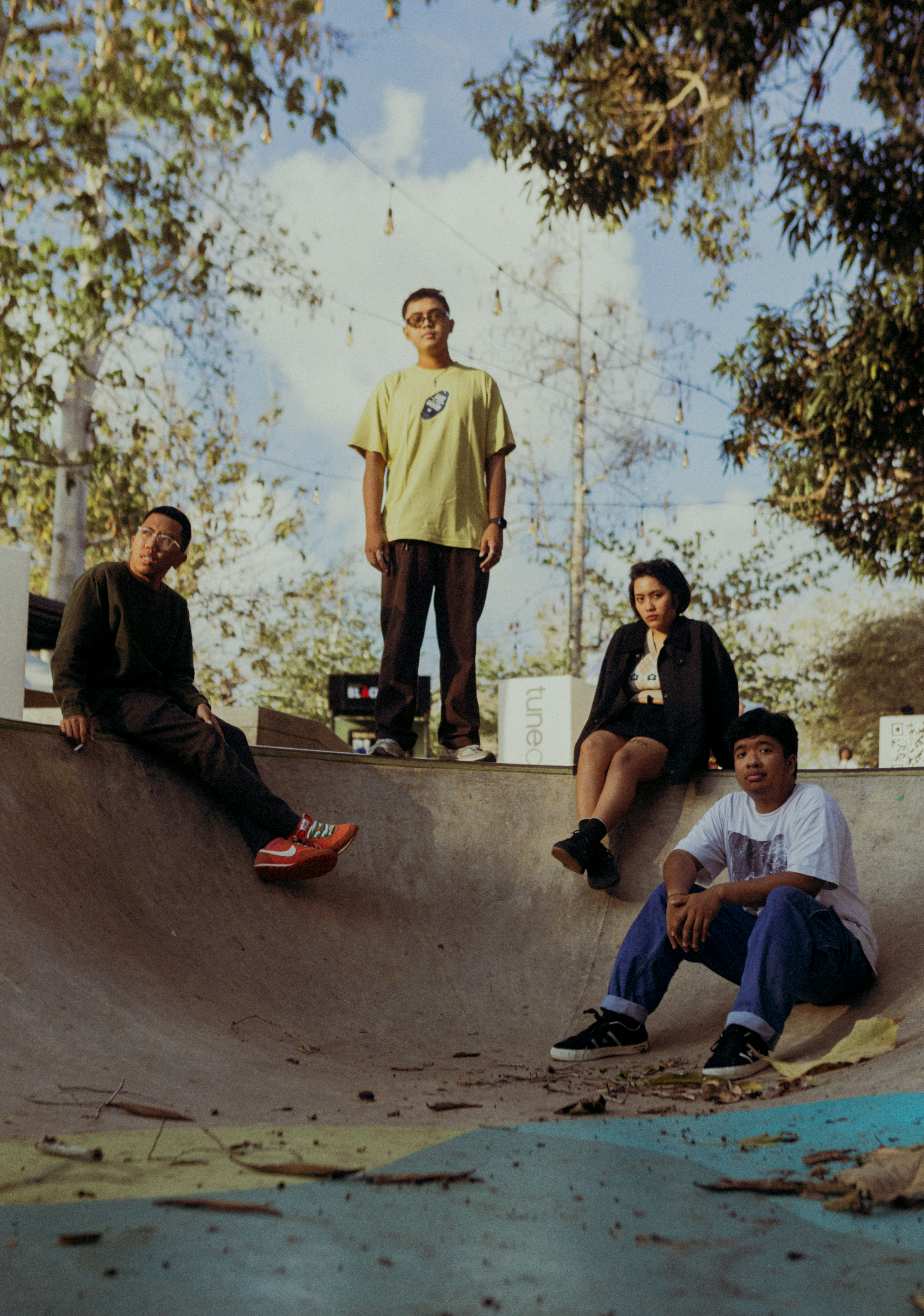
“When I think about success, I think of how we can make the music spread” Music rarely sits still; it isn’t static, nor undeviating, less so uniform, instead ever-changing; pulling, pushing, bending, breaking, twisting, and turning until the final lick. Whether such sounds erupt from shoegaze guitar strings vibrating madly from an amp, or emo confessions through the mic, Indonesia’s ‘Milledenials’ are deep in the works of mastering the riddled sound. Earlier this year, the four-piece released their newest EP, ‘It’s Terrifying and It’s A Shame’, mixing dreamy progressions and instrumentals with the punch of emo indelicacy and it’s accompanying unapologetic nature; an approach that refuses to let the four-song duration sit passively in the ear; not asking to be felt, rather insisting, knocking on your door with a mesmerising and involuntarily head-nodding beat. Over Zoom, my co-interviewer Jihoo and I were fortunate enough to snag the opportunity to discuss with three out of the four members: Billy, the bassist, alongside the two guitarists, Made and Elel. Emerging from the underground venues of Bali, throbbing with intimate crowds and stage diving, to larger, world-wide, festival stages, ‘Milledenials’ spoke openly about their methods in making music, their EP, and what drives them to create, to release, and deliver performances that sustain an honest portrayal of those cavernously buried emotions: of sadness, of anger, of whatever you and I have felt before, yet never are loud about. Now, I wish not to overdramatise, overhype, or bore your heads off with the same synonymous adjectives to describe their ‘amazing’ and ‘wonderful’ music, but to encourage you to take a peek at what the band truly has to offer—laughs, talent, and promise. In the interview, the trio play off each other, letting us in on snippets of the creation process, whether that be influences from tear-jerking anime, inspiring movie soundtracks, or what message they strive to achieve in each song—always striking gold, in Jihoo's and my view. So, to all readers, I implore you to read on and sink your teeth into the rich meat and character of the band; I can promise they’re just as compelling to listen to as they are to learn about.

1. A Sliver Of The Band

J (Jihoo): To start, I’m so happy to hear you're visiting Barcelona, for the Primavera festival. With the chance to perform alongside names like Beach House, Machine Girl, Kim Deal, and more, overall, how would you say you’re feeling? Made: Well, at first, we hadn't expected the news that we’re going to Barcelona at all, but of course we were, and are, so happy. I remember the day we were told; I was with Elel, and I completely freaked out when I saw all the great bands we’re performing with. Specifically, when we saw Cap'n jazz, I jumped and threw up in excitement... kind of embarrassing, but such fun. Billy: It was insane, I mean, when I saw our band name on the poster alongside the bands I used to listen to, it’s like “my god!” Elel: It feels so surreal, going from watching Primavera on YouTube, seeing our favourite artists, like Turnstile, playing there, to getting that chance yourself... it’s that feeling of excitement. But even now, we hope we get another invitation for an even bigger festival. J: Unfortunately, for obvious reasons, we won’t be able to go see you in Barcelona, but it’s great to hear it. Even from Hong Kong, we’re equally as excited. When performing live, do you like to give variation to your recorded songs? Made: Sometimes we do get a little bored of playing the same thing, so we change the arrangement and line-up, then people can listen to new variations, or switch up the intro and instrumentals during live sets. N (Nia): Speaking of performances, what role has Bali, Denpasar, or home played in shaping your sound, lyrics, public image, and persona as a band? Made: From my experience, the sound we play in Indonesia is totally different to anywhere else. I used to play in traditional scenes, like Gamelan, and that affects how I play and how we make music. In Indonesia, our sets are more aggressive, more energetic. Elel: In Bali, there’s always, always, more energy. I mean we’ve seen the scene since we were teens, loads of people like metal, hard rock, and still now, the Balinese are loving Rock n’ Roll. Even us, we all have different genres we listen to... me, Billy, Made, Madia, and our past membersmember, we fuse what we love as we like. But the people have given us a label, they say ‘Emo gaze’. Billy: I think Denpasar has a really masculine taste of music, especially from my hometown in Kuta. Punk Rock has become its own scene... I think I can safely say that Bali is influenced by such sounds. Now, tickets are all to Rock n’ Roll and for the past five years, it’s gained insight into the genre. As said, we had very different tastes in music... like I used to listen to Hip Hop... but when we met and combined in the workshop, something new formed. Made: We like to listen to dreamy, really slow, even sad songs and combine them from other genres to form our music... we actually don’t even know our exact genre. Everyone asks, and I have to respond with ‘I don’t know! I just like to make our stuff!’, from emo to shoegaze, and now, slowcore, we just like making our music. N: Given that listeners have spotted influences of ‘Emotional Hardcore’ or, for short, ‘Emo’ in your music, a genre typically known for its, titular, “emotional” outlook, what do you hope listeners take away from your music? Made: Well, for the audience when they listen to our songs... man, just to cry about it, about any and all of your problems... to know it’s okay to express your emotions, like, that’s a really healthy thing to do! For us, in a way, listening to songs is helpful, it lets us feel. I want to tell our audience, it’s okay to cry. Billy: We want to convey a message, about what we felt when we made the music, to confide in listeners, and to constantly say it’s okay to live with heavy things and mistakes. When we write, we think back to the ‘Five Stages of Grief’; there’s anger, denial, depression... there’s plenty. It’s a message to the audience, it’s okay to express your feelings. Elel: For me, the first time we made our music, we just tried to capture everything in our songs and our EP. Something we didn’t expect, when we threw it out into the internet, was the audience reaction. I can feel it, in live performances, when we play on stage, and sing along with them, it feels as if everyone has one similar feeling, all the same... meaning everyone can relate. J: Within ‘Emo’ and ‘Hardcore’, often there is this myth where you don’t have to be a good singer. What do you think? Billy: So many people say, ‘if you have a good guitarist but a really bad singer, that’s Emo!’ Made: Because it’s about our emotions, we just don’t care! Nah, nah, I'm only joking... I really do think it’s important to sing with emotion and heart, but, I guess, if you’re out of tune, it’s no good. It’s really as simple as that, sing the way you want.

2. A Slice Of The Album

J: In ‘It’s Terrifying and It’s a shame’, for every song or track, it seemed a new style was utilised. How did that fresh and ever-changing idea come about and how do you think it shone through in the music? Made: The first song we made for the EP, was quite new and made nearer to the start of the creation process, and we attempted to make it more ‘pop-ish’ but without erasing any of the fuzzy sound we like. In the EP, we wanted to talk about and focus on the experience of ‘heartbreak’, not only because of yourself, but also because of others. We liked making it more personal, almost forcing you to listen to our problems. Elel: For me, ‘It’s Terrifying and It’s a shame’, is, yes, about heartbreak, but mostly from our experiences. The EP started from something stressful as in that time we just had pure creator's block all whilst trying to make new music. And, just to add to Mane’s point, it made the music more emotional... the environment almost manifested into something useful and likeable. Billy: It’s been well explained by Made and Elel, but something I think the audience and listeners noticed about this EP isEP, is in our riffs, there’s a new sound, and even in ‘Daises’, when Made sings, it really shows the EP is full of surprises. Made: Actually, that was the first time I’ve ever sung for the band... and I don’ t like it, personally! I barely hear that song, because I was so embarrassed about it. Many people hadn’t expected it, although, some did tell me that they liked it, and were like, “oh yeah, it’s not that bad”. So, some good things came of it at least. J: Another song on the EP, ‘Dumb Ass Pop Song’, had a real Beastie Boys’ aesthetic to me. Now, is that just me pulling together strings or a coincidence, as, Billy, I heard you’re quite the fan? Billy: It’s true, I like them a lot! Fun fact, when I started ‘Milledenials’, I wanted us to be more hardcore punk - alike to the earlier years of ‘The Beastie Boys’, when they formed their band. When we were in our trio, me, Elel, and our past member, we played that sound without even knowing how to sing. Elel: The songs were almost never-ending... with just the same three chords! After, we met Made and he changed everything for and the course of ‘Milledenials’. That’s why in our first few songs; we still played so hardcore... fully influenced by ‘The Beastie Boys’. Made: But for ‘Dumb Ass Pop Song’, we didn’t expect that! Billy: Well, I mean, I guess I could see it... in the outro, we just didn’t realise! Elel: Actually, when we went to make it, we tried to make the singing influenced by ‘Pop’... so someone interpreting it as something similar to the ‘The Beastie Boys’ is definitely good. J: Well, besides notable influences poking through the EP, I’ve been really enjoying the originality of what the entire band has been bringing to the table. In fact, ‘Precious Me’, your single, is the most vibrant and emotional shoegaze song I’ve ever heard. Made: Thank you, thanks a lot! Honestly, that was really stressful for us... because, at the time, we were deep in creator's block, and then all at once, when me and Elel tried to make something randomly... it was like, ‘Boom!’, and it happened. In only thirty minutes, or one hour-ish, we already had the structure. Elel: Actually, ‘Precious Me’, wasn't how it is now the first time. We had already made it, the lyrics, or more so, our ex-drummer, so it was a song that was considered done. We tried to throw it to the team, but all we could think was ‘Oh damn, it’s so cheesy!’. Then, we changed everything... the music and the lyrics. Stressful to say the least... we barely even know how it came out the way it did. Made: It’s one of our favourite songs also. N: Well, switching from ‘stressful’ memories to more happier thoughts, is my last question. I will admit, it’s quite broad, but what does success mean to you as a band? Is it about fame, fulfillment, excitement, or something else entirely? Made: Personally, when we make music, we have no pressure... we’re just doing what we love. We can travel, be all around the world, and when someone asks, ‘what do you do for a living?’, success is ‘I’m doing music and travelling!’. That’s the dream. Billy: It’s when I can look at my ID card, and under my job, it’s ‘Musician’. But also, seeing the world, travelling with bands, and whenever people are happy with our music. Elel: When I think about success, I think of how we can make the music spread – to not just stay in our hometown, not just our nation, but to the world, so people can feel what we feel... to create something that is relatable for everyone... to share our emotions.

Shaki Tavi, MINOR SLIP

Written by Jihoo Kim

Stripped back guitar riffs represent Los Angeles band Shaki Tavi’s style of shoegaze. Yet, their latest record “Minor Slip” turns to a very different angle from their sugary self-titled debut LP. The album shows particular resemblances: organized power from the heavy distortion, brutalism from the giant sans-serif texts of the cover art, and human instincts from almost unrecognizable resounding vocals. The heavy layer of texture makes the album very worth digging into.

Julius Asal, SIENA TAPES

Written by Natalie Kung

It begins with the sound of record tapes and ends with the gentle ripples of Maurice Ravel’s homage to late Romantic composer Alexander Borodin. Yet, between the waves, pianist Julius Asal deceives the listener by slipping his compositions that sing of early French modernism. With the consistence of muffled acoustics and heavy pedalling, Siena Tapes truly reflects its very title.

Robin Kester, DARK SKY RESERVE

Written by Natalie Kung

Anyone familiar with the likes of psychedelic folk or neoclassic electronic music will instantly connect Robin Kester’s “Dark Sky Reserve” will relate to similar artists such as Weyes Blood. Regardless of familiarity, this album is a collection of lyrics inspired by the dark sky, beautifully accompanied by the swashes of drum. Highly recommended as an evening remedy before sleep.

Earl Sweatshirt, LIVE, LAUGH, LOVE

Written by Jack Cooper

Taking a more light-hearted approach on life, Kgositsile’s new album displays an exploration of his personal growth, as well as diving into themes such as fatherhood. The album’s production is praised by many, as expected from Kgositsile’s works. Live Laugh Love, like the title, is very light-hearted and a laid-back rap album compared to Sweatshirt’s previous, darker-sounding works.

Little Simz, LOTUS

Written by Jihoo Kim

Lotus marks another major benchmark in Little Simz’s career and UK’s hip-hop scene, following Sometimes I Might Be Introvert. Yet, the word “introvert” cannot be further away from this album’s style. Rather, it’s comprised of vengeance and confidence which ironically surpasses “Standing Ovation.” Paired with bold production on both visual and auditory end, Lotus demonstrates that even a blockbuster film can carry human emotions when it’s well made.

The Weeknd, HURRY UP TOMORROW

Written by Leonardo Pillot

Hurry Up Tomorrow is a gut-wrenching, provocative narrative that grapples with themes of fame, identity and burnout. The 84-minute LP makes frequent reference to the death of his pop-star persona, mentioning his ‘legacy’ mere seconds into the opening track. This is his most experimental album to date, integrating the alternative sounds of synth pop and Brazilian phonk (São Paolo) into his RnB sound. The album doesn’t fall short of noteworthy collaborations either, with electronic music pioneer and legend Giorgio Moroder appearing on the track “Big Sleep”. A worthy culmination to the After Hours Trilogy, and possibly the Weeknd’s discography.

caroline 2 . By caroline . Region is United Kingdom . Genre is Post-Rock .

caroline, CAROLINE 2

Written by Jihoo Kim

What caught my eyes for “caroline 2” was the pre-release single featuring Caroline Polachek “Tell me I never knew that.” In hindsight, “Tell me I never knew that” fits so well within the album for something that could’ve been a one-off single. Outside Maroon 5 and Imagine Dragons, we rarely see bands collabing with popstars (and with a very obvious reason too). But Caroline Polachek feels so unique, almost like an instrument rather than a voice. Not only that, the fact that we have two Carolines in a “caroline two” album taps some double entendre. The opener track “Total euphoria” is a demonstration of irregularity, and that’s perhaps what characterizes the whole album in midst of other post-rock releases. The accompaniments feel spontaneous, creating sudden bursts of tempo and rigid energy. For instance “When I get home” starts off with three-minute build up of repeating “When I get home / When I get home / I might just ask / When I get home,” just to immediately cut it off to move to a seperate series of repetition. It makes sense when we treat the entire album as one song. “Two riders down” is the most powerful song off “caroline 2,” and the power to span the entire duration of six-minutes, from the screeching vocals to the huge instrumental build-up. On the other hand, expressions in the album’s first tracks simply fades away, sharing themes such as emotional departure and britpop (“song two” from blur and “Coldplay cover”). Overall, I admire caroline 2’s uniqueness and consistency.

Another Secret . By Nastyona . Region is South Korea . Genre is Jazz-Rock .

Nastyona, ANOTHER SECRET

Written by Diana Xu

If you’re into Korean jazz or alternative rock, I recommend Another Secret by Nastyona. This album really pulls you on an unusual listening experience, the piano, drums, and guitar is super catchy and mixes together very well. The lead singer’s vocals are wispy and makes it feels like she’s whispering directly in your ear, telling you a secret (haha). This was my most listened album during 2022 and it’s still one of my favourites, the use of rock elements within the songs really helps the album feel more alive. The song ‘My September’ is a fan favourite among listeners, it gives an ominous and unsettling tone, especially the piano in the beginning — It’s super addictive. It may be an acquired taste to some first-time listeners, but it’s definitely a recommended introduction to Nastyona. Lyrics-wise, it’s interesting — It’s a song about her trying to trap her partner into a relationship, and ultimately destroy them (In the song, it gets them to commit suicide, but it’s most likely she means a self-destruction of sorts). My personal favourite songs have to be, ‘The Heavy Snow’ and ‘Please Stay With Me’. ‘The Heavy Snow’ is very cheerful and upbeat, the piano incorporates perfectly with the vocals and it’s very enjoyable to listen to — there is an instrumental break near the end of the song which is brilliant. ‘Please Stay With Me’ is the exact opposite, instead of an electric guitar, it is replaced by an acoustic guitar — it changes the whole mood of the song, making it melancholic and calm. Her vocals are more delicate and light, making feel very gentle; like a warm embrace.
Artist.

Who is Ozzy Osbourne

Written by Isabella Cappelin
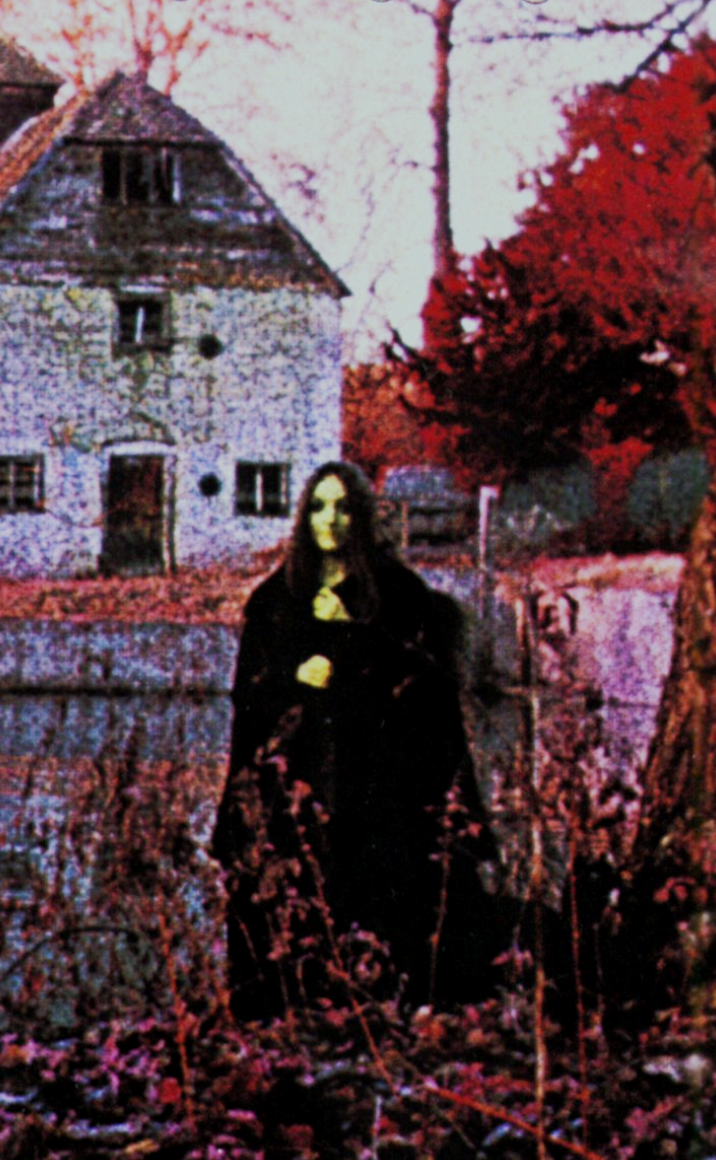
"It is with more sadness than mere words can convey that we have to report that our beloved Ozzy Osbourne has passed away this morning." On July 22, 2025, the world lost a legend. John Michael "Ozzy" Osbourne, the prince of darkness, the frontman of Black Sabbath, and the pioneer of Heavy Metal, passed away at the age of 76 after suffering a heart attack. He took his final stage on July 5, 2025 with Black Sabbath in his hometown of Birmingham, England, serving as a remarkable end to his long-lasting career. His death marked the end of an era, but his story of rebellion, redemption, and artistic evolution continues to inspire generations. As a child, Osbourne was faced with various challenges. He struggled with undiagnosed dyslexia, which was instead recognised as attention deficit hyperactivity disorder, affecting his education. During his teen years, he worked part-time at a slaughterhouse. This would later inspire some of his most notorious acts onstage, biting the head off a bat during his performance in Des Moines. Osbourne has also been involved in a failed burglary attempt, resulting in a 6 week imprisonment at Winson Green Prison. Despite all that, music became his salvation. His life began to take a turn once he heard The Beatles ‘She Loves You’, triggering his passion for music. In a later interview, Osbourne stated that “[She Loves You] was such an incredible explosion of happiness and hope,” and how he “used to dream, wouldn't it be great if Paul McCartney married my sister.” Osbourne’s first band was short-lived. During the late 1960’s, ‘Rare Breed’ was formed, consisting of Ozzy Osbourne as the vocals and Geezer Butler as the lead guitar. The band had only played two live gigs before disbanding, with no recordings released under the name. However, the partnership between the two proved to be pivotal. After the band broke up, the two reunited to form ‘Polka Tulk Blues’, recruiting guitarist Tony Iommi and drummer Bill Ward. The band’s original name later changed to ‘Earth’ and was finalized with ‘Black Sabbath’. The Rare Breed represents the start of Ozzy Osbourne's musical career and Black Sabbath's journey towards fame. Their debut album Black Sabbath (1970) was recorded within just a single day but had an instantaneous impact on the music industry, reaching number 8 on the UK charts and number 23 in the United States. Black Sabbath attained world-wide recognition after the release of their second album Paranoid (1970), featuring timeless songs such as ‘war pigs’, ‘iron man’, and ‘paranoid’, topping charts in the UK and achieving number 12 in the US. What made Black Sabbath stand out, and what continues to make their music iconic, is the distinctive characteristics of their music, utilizing each member's own unique skills. However, Osbourne’s raw, eerie, wailing vocals were the pièce de résistance. It brought life into their music. His high tenor range and melodic approach, almost hinting at the pain and vulnerability behind his music, heavily contrasted Iommi’s low-tuned, heavy riffs, carrying the sound of weight and dread. He wasn't trying to overpower the music; he was another instrument in it. Osbourne expressed the painful truth of reality through his lyrics. The suffering, the fear, the corruption, the alienation, the madness, he wasn’t afraid to communicate this, even delving into his own personal struggles with addiction and relationships. Undoubtedly, this attracted international attention as it made their music humane, allowing fans to feel a sense of connection. “I watch the sun go down like every one of us, i’'m hoping that the dawn will bring a sign, a better place for those who will come after us this time” [Dreamer - Down To Earth] Osbourne’s relationship with substances began in the working-class pubs of Birmingham, England, where heavy drinking was a cultural norm. His substance abuse led to numerous incidents, threatening both his career and his life. During Black Sabbath, his addiction had grown dramatically, consuming an array of substances (daily intake of LSD for two years and copious amounts of cocaine), undermining the band’s stability. After releasing the album ‘Never Say Die!’ (1978), Osbourne was kicked from Black Sabbath due to his struggles with alcohol and drugs. "I’ve always been self-medicating because I’ve never liked the way I felt" Osbourne had received many awards throughout his career with Black Sabbath, and his solo. He had received and induction into the Rock and Roll Hall of Fame twice: with Black Sabbath in 2006 and as a solo artist in 2024 4 Grammy Awards, 3 with Black Sabbath and 1 solo, an MTV Europe Music Award for Global Icon in 2014, and Ivor Novello Award for Lifetime achievement in 2015, and finally, stars on both the Hollywood walk of fame and Birmingham Walk of stars. Osbourne’s story shows beyond doubt that no matter what background you may come from, no matter the pain, the trauma, or the struggle, you too may change your ‘fate’. As the legend himself said “Just remember love is life and hate is living death. Treat your life for what it’s worth and live for every breath” [A National Acrobat - Sabbath Bloody Sabbath], don’t be afraid to pursue your dreams before it becomes too late. Don’t live your life in vain. Ozzy Osbourne’s life as a star was undoubtedly rough, suffering through substance abuse, difficulties as a child, and criminal convictions. In spite of that, the man became a legend in the music industry and will go down in the history of music. Both his solo career and Black Sabbath will continue to live on, even after his passing.
D.I.Y.

How to write melodies like Paul McCartney

Written by Natalie Kung
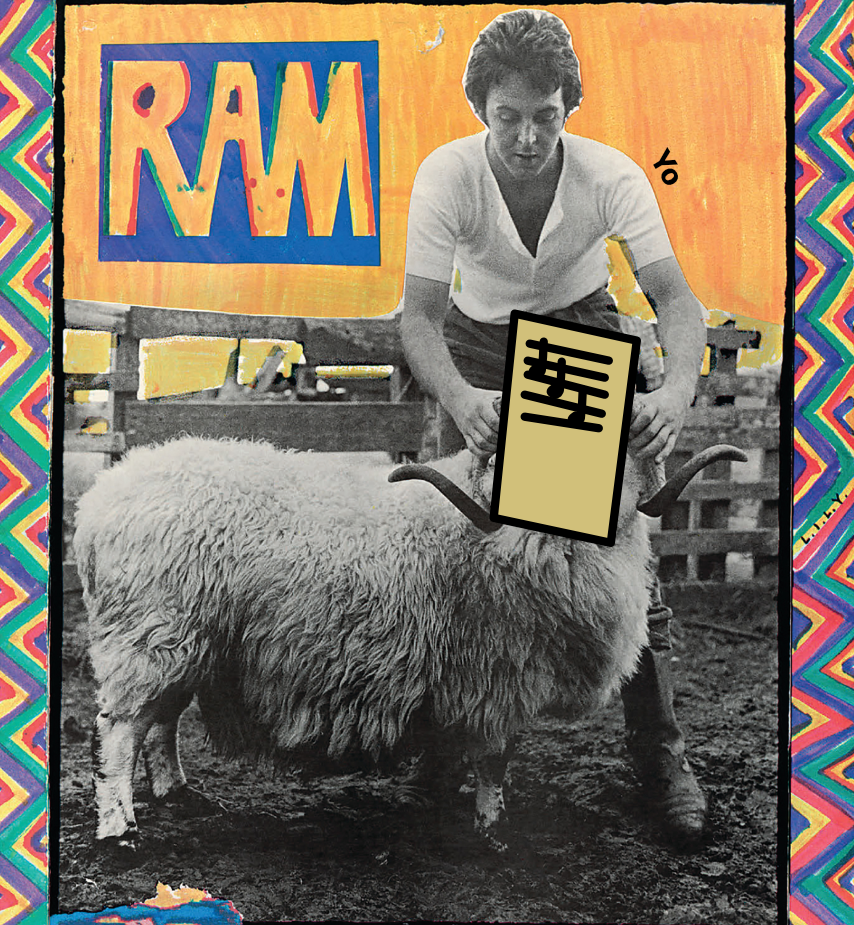
When you come across the name “Paul McCartney”, you instantly associate him with John Lennon, and subsequently: The Beatles. Paul McCartney was an octopus: he was the bassist, the pianist, one of the main lead singers, but most importantly, a composer. According to his official website, he alone composed 584 songs, and co-wrote another 180 with members of the Beatles, and countless more with different artists. From iconic songs like Let it Be to Tug of War, let’s face it: Paul McCartney is a genius in writing unforgettable melodies. This begs the question: how, then, does one write a melody like Paul McCartney? In an interview from 2015, 82-year old McCartney said, “I just sit around with my piano or guitar and play around with shapes and chords until the melody hits.” However, he does not answer the question exactly, does he? After all, to McCartney, thinking of a melody is akin to a natural process, rather than something you’d write down and work on for the next 15 years. Thus, through a bit of music theory and analysis, this article will aim to answer: How do you write a melody like Paul McCartney?

Create a four chord progression that harmonically makes sense.

A chord is a stack of two or more notes. Therefore, a four chord progression is exactly what it sounds like it is. Perhaps you are already familiar with the I-V-vi-IV (1-5-6-4). If not, then just think of the four-chord progression as four different colours that blend beautifully with each other. A famous example of McCartney’s use of said chord-progression would be in Let it Be. Specifically, if you listen to McCartney’s ‘2021 Single version’ of the song, you’ll more clearly be able to hear how the subtle chord changes balance out the lyrics. Let’s go near a keyboard and try playing out these three cohorts of notes as chords in order: C-E-G; G-B-D; A-C-E; F-A-C. As you play these chords, you’ll realise that they flow quite smoothly. This is because the first three chords of the sequence utilise all the notes of the C major (natural) scale, thus creating a sense of harmony. Sometimes, McCartney made his music sound more interesting by using chord inversions. For example, if an A minor chord is A-C-E, then you can restack the chords as C-E-A, or E-A-C. The fun thing about restructuring these chords is that they are not limited to a singular octave. The longer you experiment with this 4-chord progression, you’ll find out two major things: (a) adding an extra octave or two enriches the texture, (b) different chord inversions evoke different moods. A very good example of this would be from Mccartney and John Lennon’s Don’t let me down.

Join up a series of random words and put them in a rhythmic pattern that you feel is right.

Which comes first: the melody, or the lyrics? According to McCartney, it was usually the melody that came first. A famous example of this would be from “Let it Be”, in which the iconic melody came from his dreams. However, there are also times where the lyrics came first. This would be “All That’s Loving”, in which McCartney claims he had only written because he “was on a tour bus”. There were two things McCartney did when he needed to find lyrics: 1. Base it on a real life event, or something miscellaneous that crossed your mind. The song Eleanor Rigby was based on a gravestone with the exact same name as the title, except he also used to help a woman with a different name with her Sunday groceries. 2. Scramble up random words and try to refine them. McCartney once mentioned that his father taught him how to play crosswords when he was young. So, when it came to song writing, he would sometimes play a crossword before the words connected with each other and formed an idea. After all, the lyrics to Yesterday could’ve been ‘Scrambled eggs, oh my baby how I love your legs’, instead of what we now know as “Yesterday/ All my troubles seem so far away”. Although there is no correlation between the both, it is a good example of what a sprinkle of imagination and creativity could do to you. Here is a demonstration. When I make my way back home, I always pass by a couple of elderly homes, albeit never having stepped foot into one. Remember how you felt during the event. Now try to summarize it in less than 30 words. It may not be the same for you, but I have ended up with: I wonder what it’s like to be confined to a bed/living everyday with existential dread…
Feature.

Is Slowdive slowing down?

Written by Jihoo Kim
When the essential UK shoegaze album Souvlaki was released its reception was nothing like today’s. When the essential UK shoegaze album Souvlaki was released its reception was nothing like today’s. In fact, in the early 90s, Shoegaze was supposed to fall off. Even the relatively safe A Storm in Heaven by The Verve faced negative press, then did the shoegaze front-runner Lush with album Lovelife after their successful debut. The resurgence of Slowdive’s popularity perhaps slowly progressed in the internet communities of the late 2000s, yet it became much more remarkable with the spike of Tik-Tok’s marketability during 2017-2018, alongside the resurgence of shoegaze as a whole. Now, Slowdive marks an era that never existed. Last week, I revisited Slowdive’s 2023 release Everything Is Alive. That was also the year Clockenflap brought Slowdive to Hong Kong, opened by Ichiko Aoba. I remember that the tracklist ended with Alison and When The Sun Comes, which everyone sang through. Souvlaki is supposed to be Slowdive’s magnum opus. From Everything Is Alive, Slowdive (self-titled album), to even the pre-disbandment album Pygmalion can one name a song as influential as When The Sun Comes, Alison or Souvlaki Space Station? However, the number contradicts. In the UK album charts, Slowdive’s 2017 self-titled album achieved 16th and Everything Is Alive had reached 6th at their release, while Souvlaki only had peaked at 51st. I have always felt that Everything Is Alive lacked the energy that Souvlaki had. An immediate distinction between Everything Is Alive and Souvlaki would be the musical style. While Souvlaki stands out as a foundational shoegaze album, Everything Is Alive resembles a bare minimum of shoegaze. Instead, it shares more connections with synth-pop and Slowdive’s country-influenced successor (and predecessor) Mojave 3. A subtler difference can be noticed throughout the lyrics. The superstitious implications of 40 days from Souvlaki easily gets overshadowed by Prayer Remembered and Andalucia Plays, and the mature lyricism of Everything Is Alive hardly reflects Souvlaki and Creation Record’s youthful theme of ecstasy and love. Overall, Souvlaki is lyrically and sonically more powerful than Everything Is Alive. What happened after Souvlaki? I think the better question is “what happened before Souvlaki?” First of all, the UK's alternative scene was shifting away from shoegaze, as Grunge bands including Nirvana grew more popular after their breakthrough in the US. The success of Britpop in 1994-1995 would put the final nail in the coffin, and shoegaze never saw the light of mainstream success aside from a few bands including Lush and Chapterhouse. Internally, Slowdive underwent a breakup between two vocalists Nail Halstead and Rachel Goswell, which Halstead would later remark that it had a significant influence in the recording process. A term popularized by Simon Reynolds, “post-rock,” emerged in the UK’s alternative scene throughout 1995-1998 producing Stereolab and Mogwai. Slowdive’s subsequent album Pygmalion placed itself right within this era. (Despite that, Neil Halstead wasn’t directly influenced from post-rock and instead got his inspirations from electronica such as Aphex Twin) Indeed, Pygmalion is the “slowest” album on Slowdive’s catalogue. Not only does songs like Cello have one of the slowest tempo in Slowdive’s discography, the structural build-ups of the songs take a good amount of time. Rutti already starts off with a pace that goes on par with post-rock outputs of Talk Talk, while the drone-ambient-like slowness and eeriness of Miranda and Trellisaze would even fit in the criteria for the songs by Swans. On a personal note, I think that Pygmalion marks the ambivalence of Slowdive’s musical sound that’s now been covered by their catchy, repetitive tunes. Nevertheless, Pygmalion is Slowdive’s slowest album by far. When Slowdive reunited in 2014’s Primavera Sound, the ultimatum was the money. Although, Neil Halstead thought of recording another album that would potentially stand out Slowdive from the “legacy bands.” When Slowdive’s self-titled album came out, it was already pulling numbers that neither Souvlaki nor Pygmalion had. Conversely, the self-titled album is considered as a successor to Souvlaki, thanks to the drowning, powerful sounds that overwhelms as much as Souvlaki Space Station. Star Roving and Everyone Knows encapsulates the speed and energy resembling drowsy stadium-rock, whilst Falling Ashes hands the audience a space for introspection, with a riff that always makes me think about Radiohead’s Daydreaming. In comparison to Pygmalion, the band had definitely sped up instead of slowing down. Perhaps Slowdive isn’t diving slow at all, despite that’s what my Souvlaki-induced brain has kept endorsing. Since the first three albums were popularized years after its release, I think that it’s reasonable for anyone to mess up the Slowdive timeline. It’s now our turn to wait for a Dariacore mbv album to prove who’s really the fastest of all.